
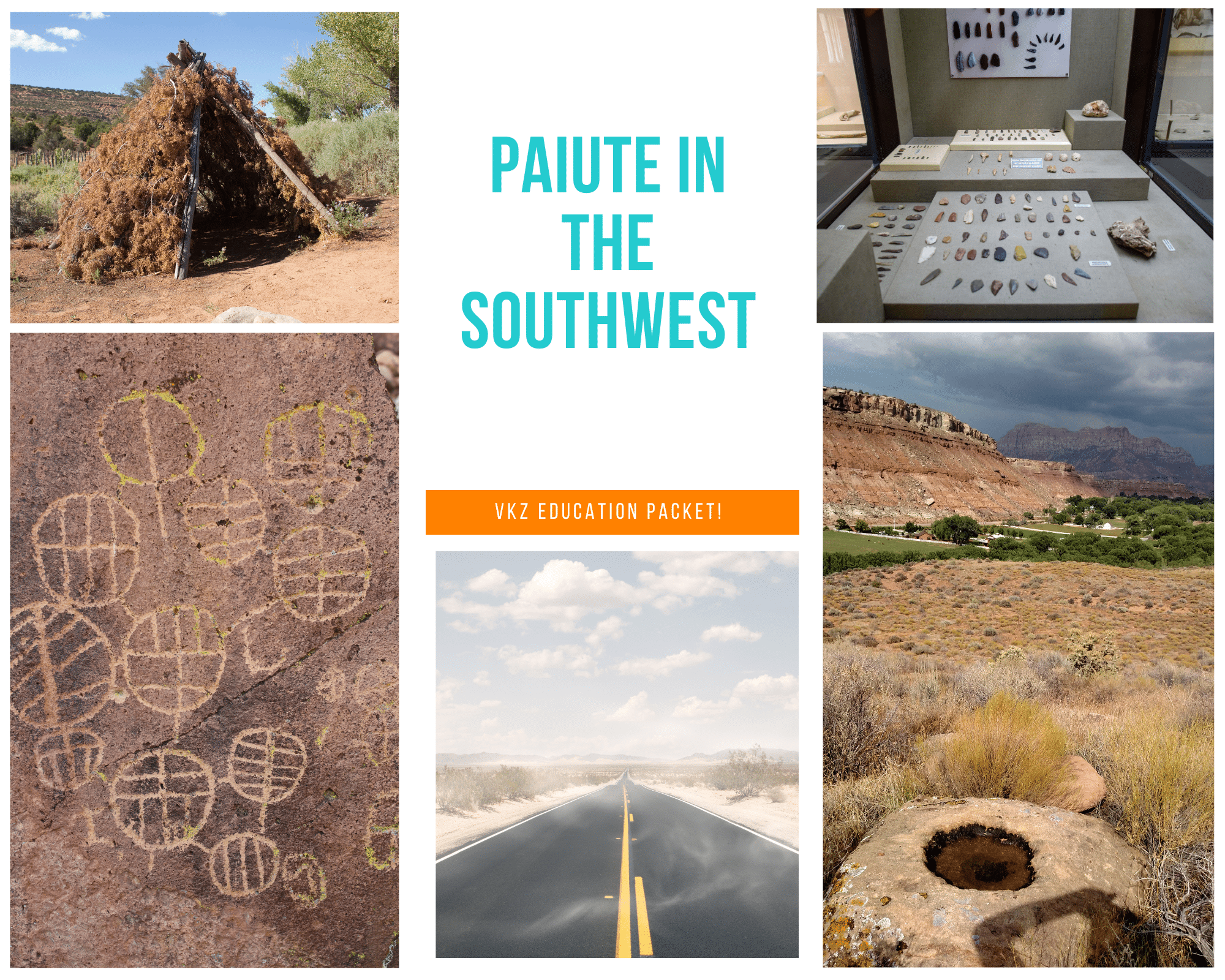
The Paiute people are a Native American tribe with a long and rich history spanning the regions of Nevada, Arizona, and Utah. They are divided into three main groups: the Northern Paiute, the Southern Paiute, and the Owens Valley Paiute. Each group has its own unique cultural practices and adaptations to the diverse landscapes they inhabit.
Go here for a complete lesson on the Paiutes from BYU, broken down for grades 2-5.
Northern Paiute
The Northern Paiute primarily lived in what is now western Nevada, eastern California, and southeastern Oregon. Traditionally, they were semi-nomadic hunter-gatherers, relying on the region’s abundant natural resources. They hunted game such as rabbits and deer, and gathered seeds, nuts, and roots. The Northern Paiute are known for their intricate basket weaving, which remains a significant aspect of their cultural heritage.
Southern Paiute
The Southern Paiute inhabited areas in southern Nevada, northern Arizona, southeastern California, and southern Utah. Like their northern counterparts, they were also hunter-gatherers but adapted to a more arid environment. The Southern Paiute practiced seasonal migration to access different food resources, including wild plants and small game. They were also known for their expertise in irrigation agriculture, particularly in the fertile areas near rivers.
Owens Valley Paiute
The Owens Valley Paiute, also known as the Eastern Paiute, lived in the Owens Valley region of eastern California. They had a lifestyle similar to the Northern Paiute, with a focus on hunting and gathering. They also practiced some irrigation farming, cultivating crops such as corn, beans, and squash.
European Contact and Conflict
The arrival of European settlers in the 19th century brought significant changes and challenges to the Paiute way of life. Encroachment on their lands led to conflicts, displacement, and disruption of their traditional practices. In Nevada, the Paiute War of 1860 was a significant conflict between the Northern Paiute and European settlers.
Reservation Era
In the late 19th and early 20th centuries, many Paiute were forcibly relocated to reservations. The establishment of reservations such as the Pyramid Lake Indian Reservation in Nevada and the Kaibab Indian Reservation in Arizona aimed to assimilate the Paiute into Western culture, often resulting in loss of land, culture, and autonomy.
Cultural Revival and Contemporary Life
Despite the challenges, the Paiute have persevered and are actively working to preserve and revitalize their cultural heritage. Language programs, traditional crafts, and ceremonies are being revived. Today, Paiute tribes in Nevada, Arizona, and Utah manage their affairs through tribal governments and continue to fight for their rights and sovereignty.
Key Tribes and Reservations
- Northern Paiute: Pyramid Lake Paiute Tribe, Reno-Sparks Indian Colony (Nevada)
- Southern Paiute: Las Vegas Paiute Tribe (Nevada), Kaibab Band of Paiute Indians (Arizona), Paiute Indian Tribe of Utah
- Owens Valley Paiute: Bishop Paiute Tribe (California)
The Paiute people maintain a strong sense of identity and continue to contribute to the cultural and social fabric of their regions. Their resilience and dedication to preserving their heritage are testaments to their enduring spirit.