
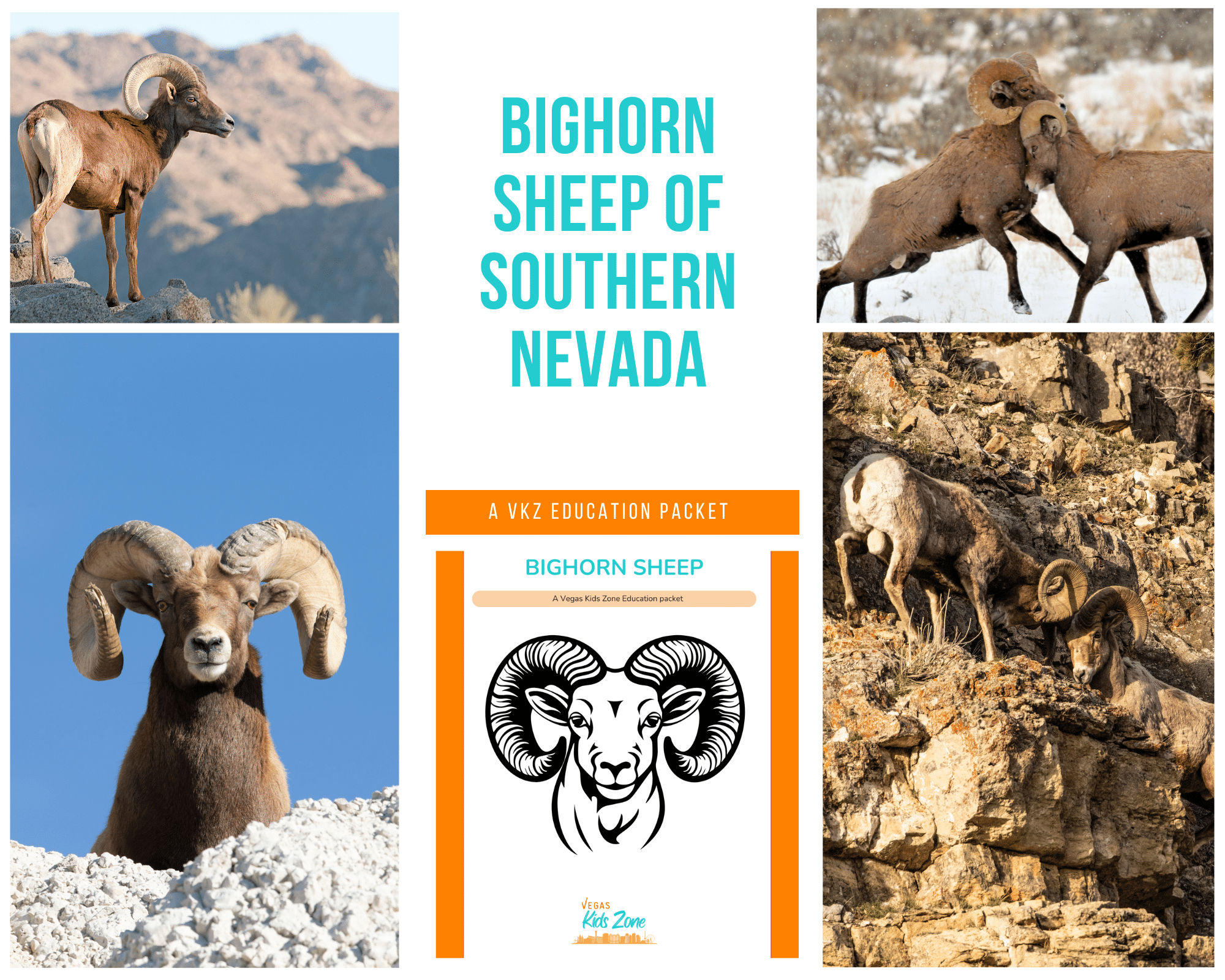
Southern Nevada is home to a remarkable population of bighorn sheep, a species that epitomizes the rugged beauty and resilience of the desert. These majestic creatures, known scientifically as Ovis canadensis, have adapted to the harsh environment of the region, showcasing unique characteristics and behaviors that make them a vital part of Nevada’s natural heritage. Read this article and download this Bighorn Sheep Education Kit and Coloring Pages as a study unit! Complete the packet and earn your VKZ Certificate of Excellence for Super Kids! Want to see what the bighorn sheep are up to right now?! The Ram Cam at Hemenway Park in Boulder City is trained on the four-legged visitors that hang at the family-friendly park regularly. Click here.

Physical Characteristics
Bighorn sheep are named for their large, curved horns, which can weigh up to 30 pounds. These horns are not just for show; they are used in dominance battles between males, known as rams, during the mating season. The males’ horns can grow up to 3 feet long and curl back over the ears, while females, known as ewes, have shorter and less curved horns.
Bighorn sheep have a robust body, covered in a coat that changes color with the seasons—light brown in summer and a darker shade in winter. Their hooves are specially adapted to the rocky terrain, allowing them to climb steep and rugged slopes with ease.

Habitat and Range
In Southern Nevada, bighorn sheep are commonly found in the mountainous regions, particularly in places like the Spring Mountains, the Sheep Range, and the River Mountains. Their preferred habitat includes steep, rocky cliffs and rugged canyons, which provide both protection from predators and ample opportunities for grazing on a variety of vegetation.
The bighorn sheep in this region are part of the desert bighorn subspecies (Ovis canadensis nelsoni), which is uniquely adapted to the arid desert environment. They are able to survive in areas with scarce water sources, often relying on water stored in their bodies from the plants they consume.
Adaptations and Behavior
One of the most fascinating aspects of the bighorn sheep is their ability to go without water for extended periods. They can survive on the moisture obtained from their diet of grasses, shrubs, and forbs. When water is available, they can drink large quantities at once, sometimes not needing to drink again for several days.
Bighorn sheep are social animals, typically found in herds. These herds can vary in size from a few individuals to several dozen, depending on the season and the availability of resources. During the breeding season, which occurs in the fall, rams will compete for dominance by engaging in head-butting contests, where they charge at each other at speeds up to 20 miles per hour.
Conservation and Challenges
The bighorn sheep population in Southern Nevada has faced numerous challenges over the years, including habitat loss, disease, and competition with domestic livestock. Conservation efforts have been implemented to address these issues, including habitat restoration, water development projects, and translocation programs to bolster populations in areas where they have declined.
One of the significant threats to bighorn sheep is disease, particularly pneumonia, which can be transmitted from domestic sheep. Wildlife management agencies work tirelessly to monitor and manage the health of bighorn sheep populations to prevent outbreaks and ensure their survival.
Cultural and Ecological Importance
Bighorn sheep hold a special place in the cultural heritage of Native American tribes in the region, often depicted in petroglyphs and other forms of traditional art. They are also a symbol of the rugged wilderness and natural beauty of Southern Nevada, attracting wildlife enthusiasts and photographers from around the world.
Ecologically, bighorn sheep play a crucial role in their habitat. As herbivores, they help to maintain the balance of plant communities, and their presence indicates a healthy, functioning ecosystem. Their role as prey also supports populations of predators like mountain lions and coyotes.