

Teens in Phoenix face growing mental health challenges in 2026, and families often need more support than traditional outpatient therapy can provide. Residential mental health facilities offer 24/7 care in a structured setting where teens can focus on healing. These programs combine therapy, medical support, and daily routines designed to help adolescents work through serious mental health issues.
Phoenix has several residential treatment centers that specialize in adolescent mental health, each offering different approaches to care. Some programs focus on specific issues like addiction recovery, while others take a broader approach to mental and emotional wellness. Understanding what each facility provides helps families make informed decisions about their teen’s treatment.
This guide covers key residential mental health facilities available to Phoenix families in 2026. It examines what makes each program unique and what types of support they offer to teens ages 12 to 17.
Avery’s House
Avery’s House operates licensed treatment homes for teens ages 12 to 17 in the Phoenix area. The program treats depression, anxiety, bipolar disorder, PTSD, OCD, ADHD, and substance use issues. Teens also receive help for self-harm, suicidal thoughts, trauma, and bullying.The organization runs two residential centers in Maricopa County, located in Apache Junction and Fountain Hills. Like other residential mental health facilities for teens in Boise, these homes provide care in quiet settings away from busy city areas.
Treatment includes individual therapy, family counseling, and group sessions. The program also offers holistic activities like meditation, art therapy, and music therapy. Each teen follows a structured daily schedule with therapy sessions, group activities, and supervised events.
Avery’s House also provides outpatient options. These include partial hospitalization programs and intensive outpatient programs for teens who need continued support. The Scottsdale location focuses on outpatient mental health care for adolescents.
Horizon Recovery
Horizon Recovery operates multiple locations across the Phoenix area, providing residential and outpatient treatment for teens ages 12-17. The organization was founded in 2022 to help adolescents dealing with mental health conditions, substance use, and co-occurring disorders.
Their residential programs take a whole-person approach. Treatment addresses mental, physical, and emotional needs through evidence-based therapies in a structured environment.
The facilities offer 24/7 care with trained staff who specialize in adolescent treatment. Parents work alongside the treatment team throughout their teen’s recovery process.
Horizon Recovery recently opened a $3 million facility in Deer Valley, expanding their capacity to serve more families. This 10-bed co-ed center includes updated amenities designed specifically for teenagers.
The programs treat conditions including depression, anxiety, trauma, and addiction. Teens receive personalized care plans that combine clinical therapies with additional support services to promote long-term recovery.
Modern Recovery Services
Modern Recovery operates residential treatment centers for teens in the Phoenix area. The facilities focus on creating a safe environment where teenagers can work on their mental health needs.
Their Arizona locations offer evidence-based treatment for conditions like depression, anxiety, PTSD, and OCD. The programs combine therapy with a structured daily routine designed for adolescent needs.
Safety and well-being are central to their approach. Staff members monitor teens while giving them space to build coping skills and work through challenges.
The centers aim to make treatment accessible and affordable for families. They accept various insurance plans and offer private care options.
Modern Recovery treats residential care as more than standard therapy. They work to create an environment where teens can focus on healing without the pressures they face at home or school.
Turning Winds
Turning Winds operates as a residential treatment center in Troy, Montana, serving teens ages 13 to 18. The facility provides care for young people facing mental health conditions, behavioral issues, and substance use disorders.
The program uses evidence-based treatment methods combined with academic support. Licensed therapists, psychiatrists, nurses, and certified teachers staff the facility. They offer specialized care for conditions including depression, anxiety, ADHD, OCD, bipolar disorder, and PTSD.
Teens receiving treatment also get help with substance use issues. This includes problems with alcohol, marijuana, opioids, stimulants, and prescription drugs.
The center offers different levels of care. Residential treatment serves as the primary option, but partial hospitalization and intensive outpatient programs are available. Treatment includes trauma therapy, group therapy, and behavior modification.
Phoenix families should note that Turning Winds is located in Montana, which requires travel for treatment.
Nexus Teen Academy
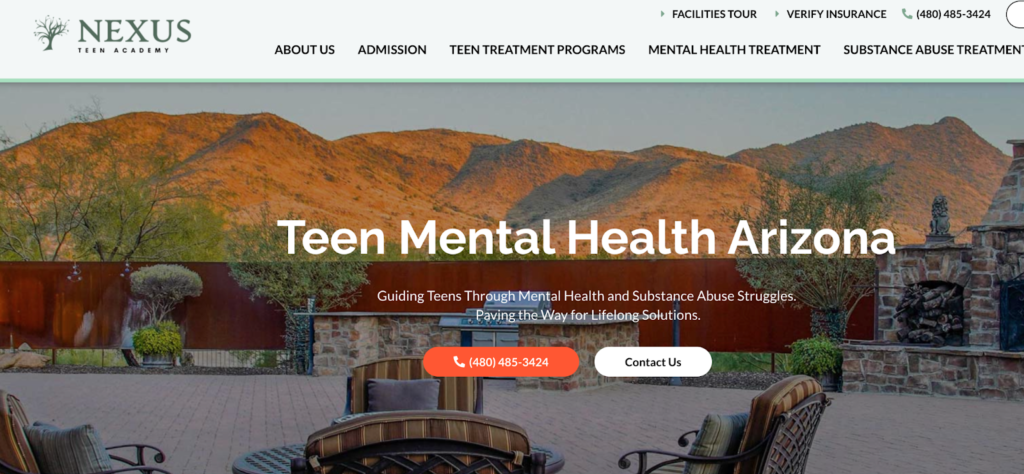
Nexus Teen Academy operates a residential treatment center in Cave Creek, Arizona, serving teens ages 13-17. The program treats both mental health conditions and substance abuse issues in a 10-bed facility.
The treatment approach centers on personalized care for each teen. Licensed therapists use evidence-based methods including DBT, ACT, Mindfulness, and Trauma-Informed CBT. Teens participate in individual therapy, group sessions, and family therapy as part of their care plan.
The facility offers gender-inclusive programming in a residential setting. Most teens stay for 30-60 days while receiving treatment. The center includes shared bedrooms, therapy spaces, and recreation areas.
Nexus Teen Academy accepts teens dealing with dual-diagnosis situations where mental health and substance use occur together. The program includes outpatient pathways in addition to residential treatment options. Clinical staff work with families throughout the treatment process to provide guidance and support.
Conclusion
Phoenix offers multiple levels of residential mental health care for teens in 2026. Families can choose from outpatient counseling, residential treatment centers, and inpatient programs based on their teen’s specific needs. Each program provides different structures and therapeutic approaches.
Key factors to consider:
- Treatment intensity and duration
- Program specialization and approach
- Cost and insurance coverage
- Location and family involvement options
Matching the right program to the teen’s individual situation makes a significant difference in outcomes. Residential facilities provide 24/7 support, professional therapy, and structured environments where teens can develop healthier coping skills.