
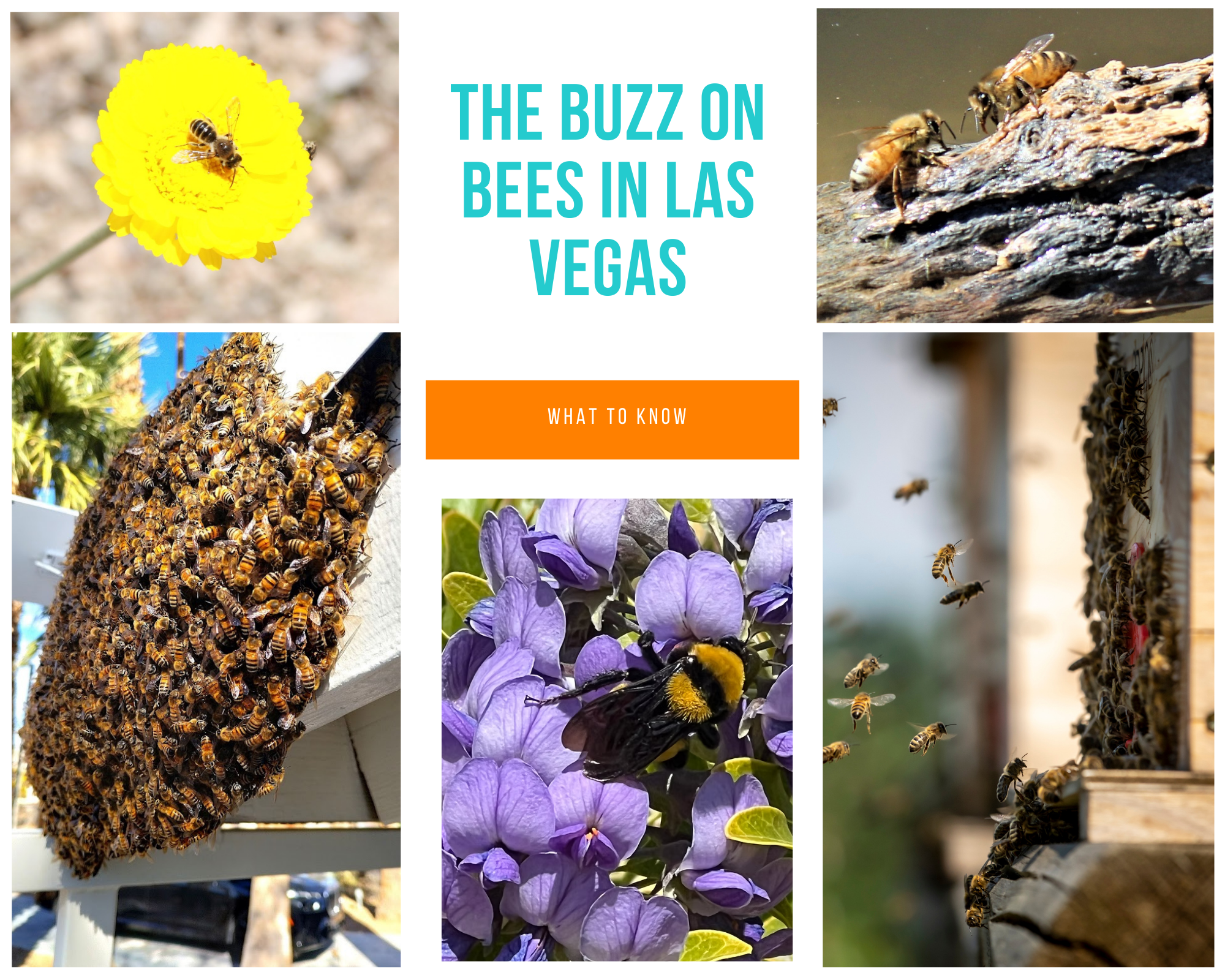
They may be tiny, but bees are big-time helpers—pollinating the fruits, veggies, and flowers we love. These busy little workers are essential to a healthy environment and food supply. But when bees start swarming a little too close to home, it’s important to take precautions to keep both your family and the bees safe.
Buzz-Worthy Bee Facts in Southern Nevada
1. Mojave Bees are Tough Cookies
Bees in Southern Nevada have adapted to our desert heat and low water levels. Talk about desert resilience! They’ll forage early in the morning or later in the evening to avoid the triple-digit temps.
2. There are 1,000+ Bee Species in Nevada
Most are solitary bees—not the honey-making hive-dwellers you might think. These solo fliers do important pollination work without all the drama of a colony.
3. Native Bees LOVE Native Plants
Pollinators in the Mojave Desert adore plants like brittlebush, desert marigold, and globe mallow. If you want to attract local bees, plant local blooms!
4. Southern Nevada Has Urban Beekeepers
Yes, even in the heart of Vegas! Beekeepers use rooftop hives to help support bee populations and make delicious local honey—some infused with hints of creosote and sage.
5. Our Bees Work the Strip (Sort of)
The Wynn Las Vegas once had an in-house apiary to support its garden and restaurant needs. Bee-lieve it or not, even luxury hotels are in on the pollination action.
6. They Help Your Farmers Market Favorites Thrive
Cucumbers, melons, squash, and even the almonds in your trail mix? Local bees helped those grow! Without them, farmer’s market tables would look way less tasty.
7. Bees Can Travel Miles—Even in the Desert
A healthy foraging bee can travel up to 5 miles to find pollen. In bee terms, that’s like walking to Red Rock Canyon and back… just for lunch!
There’s a Bee Swarm Near My House! Now What?
1. Stay Calm and Keep Your Distance
Swarming bees look scary, but they’re usually not aggressive. They’re just resting while scout bees search for a new home. Think of it as a real estate pit stop!
2. Don’t Spray or Swat
This isn’t the time for bug spray or a broom. Attacking a swarm could trigger a defensive reaction—and that’s not the kind of excitement you want.
3. Keep Pets and Kids Inside
Curious kiddos and playful pups might want to investigate. Nope. Bring them indoors until the bees move on or a pro steps in.
4. Seal Up Your House
Double-check your windows, attic vents, and chimney flues. You don’t want your home to look like a cozy new hive spot.
5. Call a Local Beekeeper or Bee Removal Expert
In Southern Nevada, there are bee rescue services that safely relocate swarms. They’ll save the bees (and save you the headache). Some pest control companies also work with humane removal services.
6. Don’t DIY the Removal
Unless you’re wearing a full beekeeper suit and have years of experience—and let’s be real, if you did, you wouldn’t be Googling this—leave it to the pros.
Buzz Off, Worries!
Tips for a Safe & Sweet Bee Season
1. Don’t Wear Perfume—Smell Like Nothing!
Bees love sweet scents… just not on you. Skip fruity lotions and perfumes when heading outdoors.
2. Wear Light Colors
Dark colors can make you look like a threat (or a bear!). Bees tend to ignore lighter, pastel clothing.
3. Skip the Swatting
We know it’s tempting, but waving your arms or swatting may agitate them. Stay calm and gently move away.
4. Cover Your Sweets
Soda cans and sticky snacks = bee magnets. Use lids, wrap up leftovers, and watch where you sip!
5. Check Before You Step
Bees love clover and flowers in grass. Shoes are your friend—flip-flops, not so much.
6. Bee Kind to Nests
If you find a hive near your home, don’t DIY it. Call a professional beekeeper or pest control service trained in safe removal.
7. Make Room for Pollinators
Planting bee-friendly flowers away from play areas keeps them busy—and your space buzz-free.
8. Pack an EpiPen (Just in Case)
If you or your child has an allergy, make sure an EpiPen is handy during outdoor adventures.