
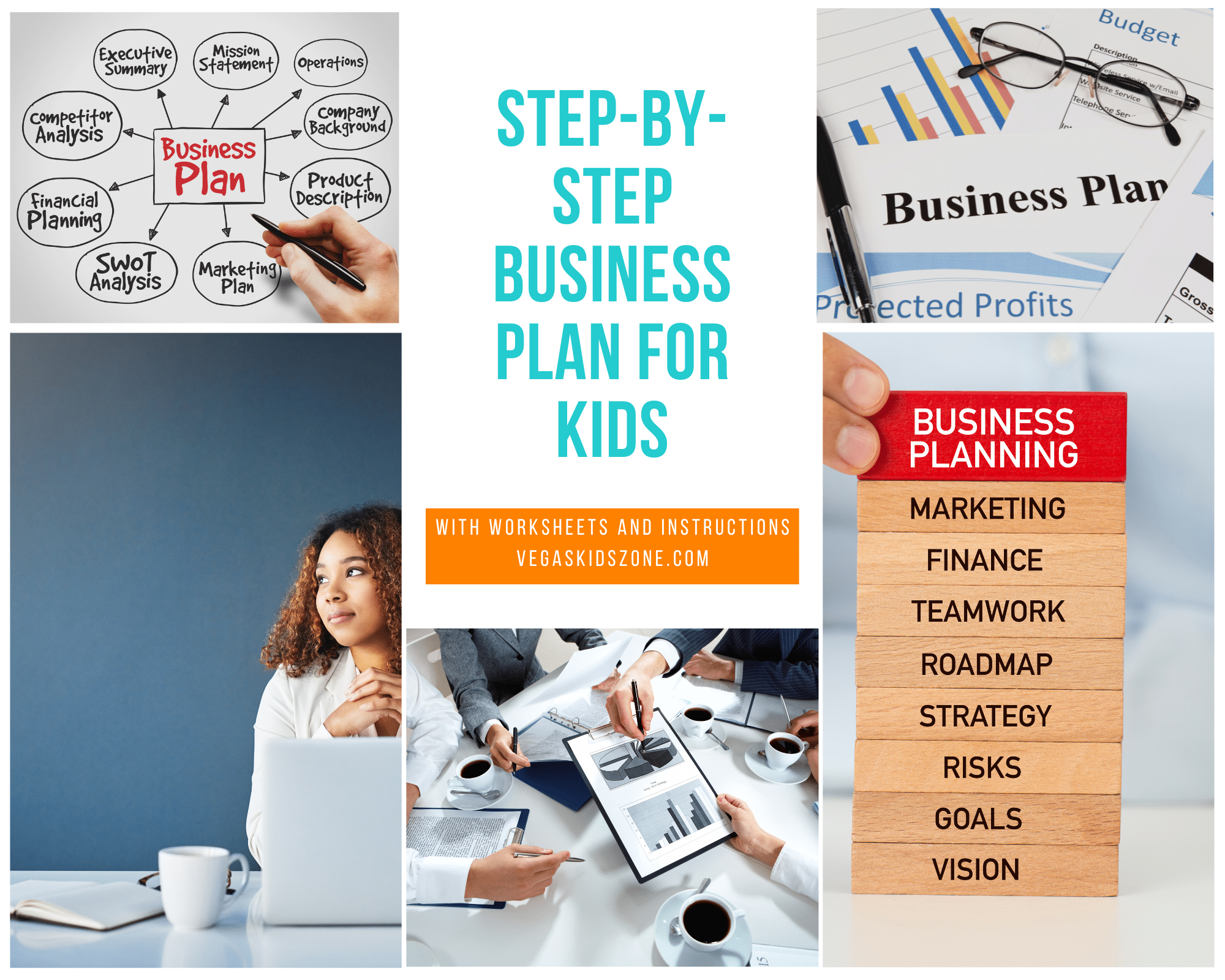
As a young entrepreneur, embarking on your business journey can be both exciting and daunting. One of the key tools that can help you navigate this path successfully is a well-crafted business plan. A business plan for kids not only serves as a roadmap for your venture but also helps you communicate your vision to potential investors, partners, and stakeholders.

Click here to get your VKZ Business 101 Packets and Downloads.
Here’s a step-by-step guide to help you write a comprehensive business plan:
Executive Summary: Start your business plan with a brief overview of your business concept, goals, target market, unique selling proposition (USP), and financial projections. This section should provide a snapshot of your entire business plan and entice readers to continue reading.
Company Description: Describe your business idea in detail, including the products or services you plan to offer, your target market, and your competitive advantage. Explain why your business is unique and how it fills a gap in the market.
Market Analysis: Conduct thorough market research to understand your industry, target market, and competitors. Identify market trends, customer needs, and the size of your target market. Use this information to assess the demand for your products or services and to develop effective marketing strategies.
Organization and Management: Outline the structure of your business, including your management team, key personnel, and organizational hierarchy. Highlight the skills and experience of your team members and explain how their expertise will contribute to the success of your business.
Product or Service Line: Provide detailed descriptions of your products or services, including their features, benefits, and pricing. Explain how your offerings meet the needs of your target market and how they differ from those of your competitors.
Marketing and Sales Strategy: Describe your marketing and sales strategies, including how you plan to promote your products or services, attract customers, and generate sales. Include details on your pricing strategy, distribution channels, and promotional tactics.
Funding Request: If you are seeking funding for your business, specify the amount you need, how you plan to use the funds, and the expected return on investment for investors. Provide a detailed financial plan, including projected revenue, expenses, and profits.
Financial Projections: Include financial projections for the first three to five years of your business, including income statements, cash flow statements, and balance sheets. Use realistic assumptions and conservative estimates to ensure the credibility of your projections.
Appendix: Include any additional information that supports your business plan, such as resumes of key team members, market research data, and legal documents. This section is optional but can provide valuable context and credibility to your plan.
Writing a business plan can be a challenging task, but it’s an essential step in building a successful business. By following these steps and carefully crafting your plan, you can clarify your business concept, attract investors, and set a solid foundation for your entrepreneurial journey.