
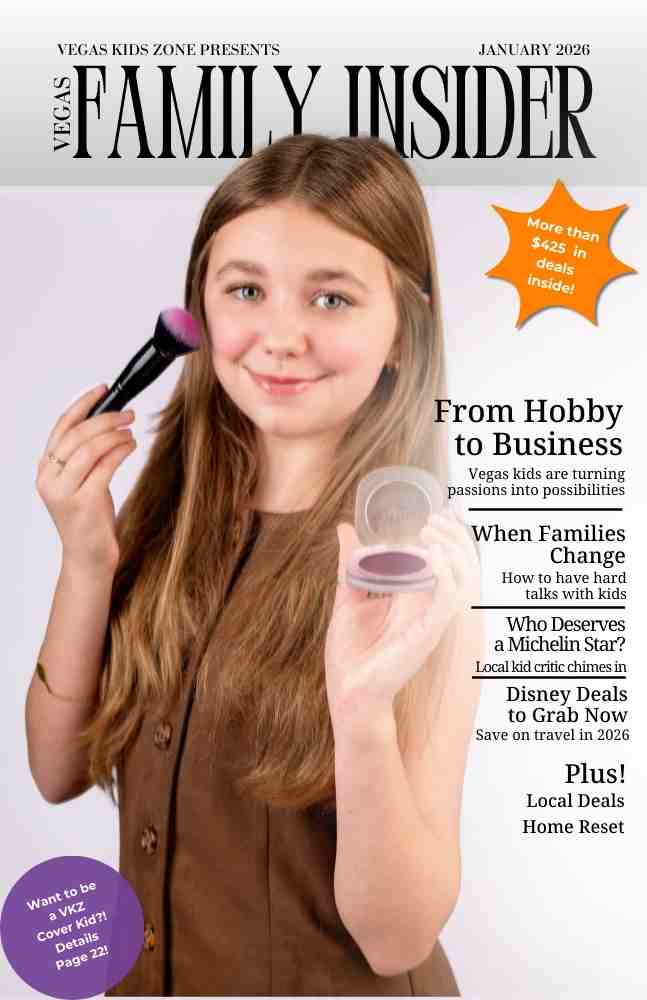
Turning hobbies into businesses isn’t just for adults. Across the country, kids are discovering that the things they love to make—slime, art, baked goods, jewelry, and even sugar scrubs—can grow into real businesses that build confidence, creativity, and career-ready skills.
At Vegas Kids Zone, we see it every month at our Kidpreneur Markets. And few stories capture this movement better than Harper Miller, a 12-year-old entrepreneur who turned her love of making sugar scrubs and makeup into a registered business with an LLC. Her Valentine’s Day Collection launches Jan. 14, 2026. Shop her products here. Follow Harper on Instagram for the latest info here.
From driveway sales to a real business with an LLC
Harper’s business journey started simply—selling lip scrubs in her driveway. What began as a fun hobby quickly turned into something more serious when she partnered with her business manager, Lisa.
Together, they created a business plan, developed new product collections, and began sharing Harper’s work on social media. With encouragement from family, friends, and early supporters, Harper raised the funds needed to officially form her business.
“That’s how we got our LLC,” Harper says—marking the moment her hobby became a legitimate company.
The moment she knew her hobby could become a career
For many kidpreneurs, the turning point is realizing that people genuinely want what they’re creating. For Harper, that moment came as her social media following began to grow.
“I realized people were interested in what I had,” she explains. “I knew it was different from other brands, and that’s what makes it special.”
That realization—my idea matters—is often what transforms a hobby into a potential career path.
How kid entrepreneurs come up with new product ideas
Product development might sound like a big-business term, but Harper approaches it the same way many successful brands do.
She reviews past collections to see what customers loved most, pays attention to trends, and thinks like a buyer. Most importantly, she listens.
“I also love getting customer suggestions,” Harper says.
This process teaches real-world skills kids rarely get in a classroom: market research, creative problem-solving, and customer engagement.
The hardest and best parts of running a business as a kid
Running a business at 12 comes with challenges—especially balancing school and work.
“The hardest part is balancing work life and school,” Harper shares. “Sometimes I don’t feel like doing something for the company, but I try to remember why I do it and what the outcome will be.”
Despite the challenges, Harper says the rewards are worth it.
“I love creating the collections and seeing how people feel confident wearing our makeup. It’s awesome to watch everything fall into place.”
Why hobbies are so important for kids’ development
Harper’s experience reflects what research continues to show: hobbies benefit kids far beyond fun.
- Studies estimate that 10–20% of children and teens experience mental health challenges, making creative outlets more important than ever.
- Participation in organized activities and hobbies has been linked to positive mental health outcomes, including improved emotional regulation and social skills.
- The American Academy of Pediatrics notes that play and creative hobbies help kids develop confidence, resilience, problem-solving skills, and executive function—skills essential for future careers.
- Long-term research also shows that teens who engage in social leisure activities are less likely to experience mental health struggles later in life.
In short, hobbies help kids build the very skills they’ll need as adults—whether they become entrepreneurs or not.
Advice for kids who want to turn a hobby into a business
Harper’s advice for other kids is simple—and powerful.
“Always follow your dream,” she says. “If you believe in yourself, it will all come together. It takes time, and sometimes you’ll feel like giving up, but you should never give up.”
Because every business starts somewhere. For Harper, it started in a driveway—with sugar scrubs, creativity, and the courage to try.