
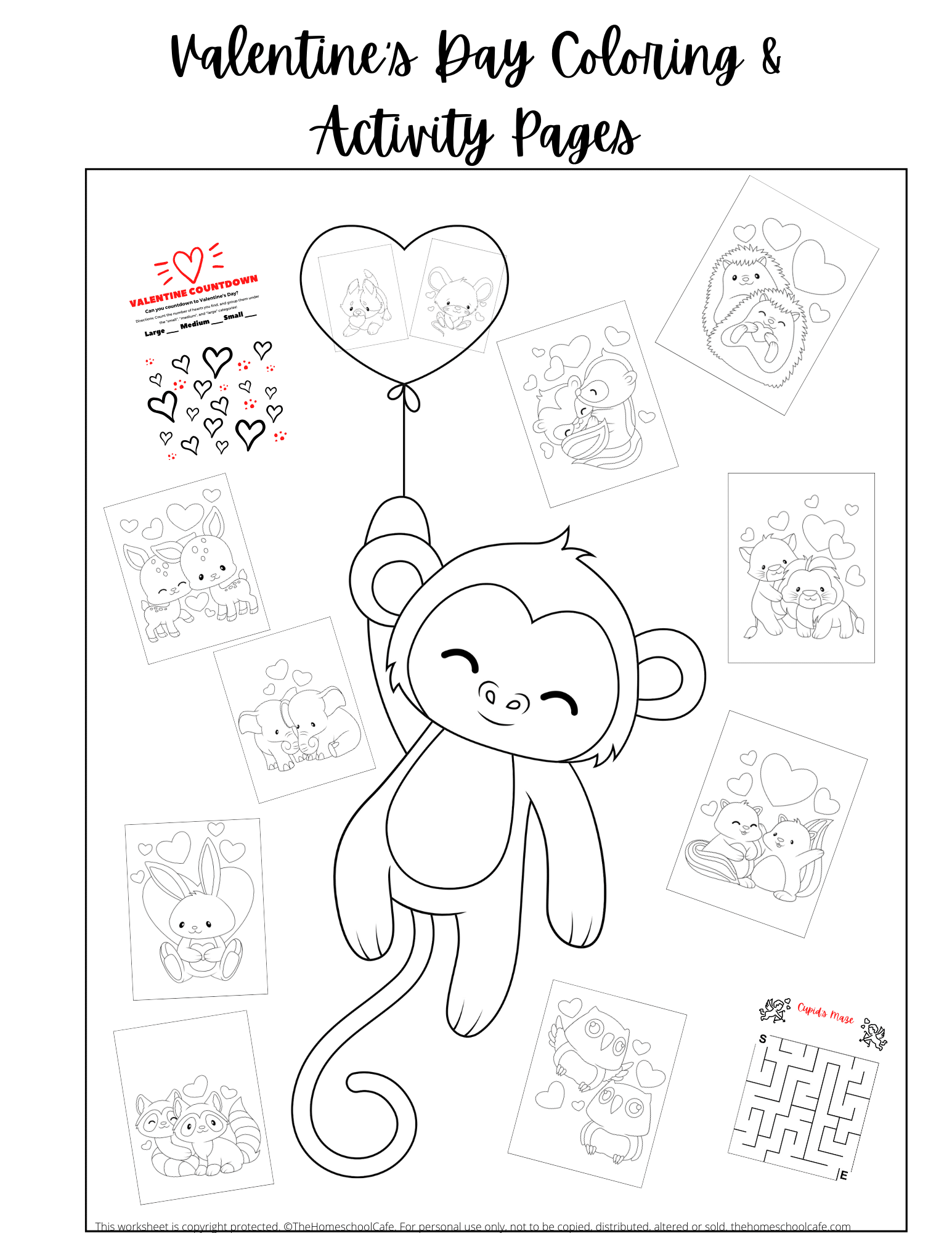
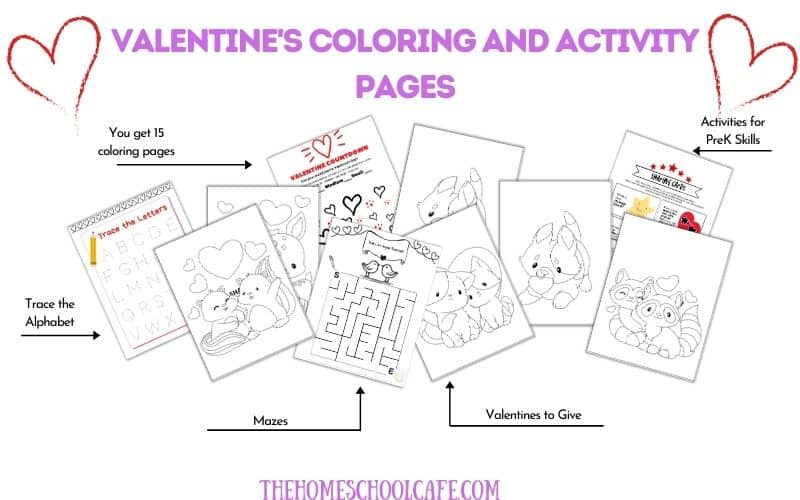
Valentine’s Day Activity Kit
Original price was: $8.97.$0.00Current price is: $0.00.
Valentine’s Activity Kit – Celebrate love and creativity with this fun-filled kit! Includes DIY Valentine cards, crafts, games, puzzles. Perfect for families, classrooms, or parties, it’s a great way to spread kindness and make lasting memories!
Description
Make Valentine’s Day extra special with our Valentine’s Activity Kit, packed with fun, hands-on activities for kids and families! Whether you’re celebrating at home, in the classroom, or with friends, this kit is designed to spark creativity, encourage kindness, and create lasting memories.
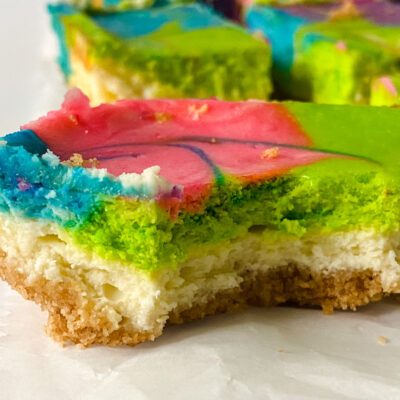
Swap out the rainbow and use red and pink dye to create Valentine’s Cheesecake Bars! Easy peasy kid-approved recipe here!
What’s Inside?
❤️ Coloring Pages – For the whole family to enjoy, color and make as a gift or for morning basket ideas.
🧩 Games & Puzzles – Valentine-themed crossword, scavenger hunt, and tic-tac-toe.
Ideas to Celebrate Valentine’s Day with Your Kit:
💖 Host a Valentine’s Craft Party – Set up a DIY card-making and craft station.
🎶 Create a Valentine’s Dance Party – Play love-themed songs and dance together.
💝 Secret Valentine Exchange – Have kids randomly select names and create a special card or treat.
📚 Read Love-Themed Books – Enjoy a cozy storytime with books about kindness and friendship.
🕵️ Valentine’s Scavenger Hunt – Hide hearts around the house and have kids find them for a surprise.
🎬 Movie & Treat Night – Watch a classic Valentine’s movie while enjoying homemade snacks.
Perfect for families, homeschool groups, or classrooms, the Valentine’s Activity Kit makes celebrating easy, fun, and meaningful! 💕
Study Unit: History and Quirky Facts About Valentine’s Day
Explore the origins, historical evolution, and cultural significance of Valentine’s Day and discover fun and quirky facts about the holiday.
Essential Question: Where did Valentine’s Day come from?
- Discuss the ancient Roman festival of Lupercalia (February 13–15), a fertility celebration dedicated to Faunus, the Roman god of agriculture.
- Explore the story of Saint Valentine, a priest in 3rd-century Rome who defied Emperor Claudius II’s ban on marriages for young soldiers and was executed on February 14.
- Examine how Pope Gelasius I replaced Lupercalia with St. Valentine’s Day in 496 AD.
Activity: Create a timeline of major historical events that shaped Valentine’s Day.
Lesson 2: Evolution of Valentine’s Day Traditions
Essential Question: How did Valentine’s Day become a celebration of love?
- Medieval Influence: Explore Geoffrey Chaucer’s 14th-century poem, “Parliament of Fowls,” which associated Valentine’s Day with romance.
- Exchange of Love Notes: Learn about Charles, Duke of Orleans, who sent the first known Valentine while imprisoned in the Tower of London (1415).
- Victorian Era & Mass Production: Discuss the influence of Esther Howland, the “Mother of the American Valentine,” who popularized mass-produced Valentine’s cards in the 1800s.
Activity: Compare and contrast Valentine’s Day celebrations in different time periods.
Essential Question: How do different cultures celebrate Valentine’s Day?
- Japan: Women give chocolates to men, and men return the favor on White Day (March 14).
- Denmark: People exchange pressed white flowers called snowdrops instead of roses.
- South Korea: Each month on the 14th has a different celebration, including Black Day (April 14) for singles to eat black bean noodles.
- Wales: Lovers exchange carved wooden spoons called love spoons as a symbol of affection.
Activity: Research and present an interesting Valentine’s Day tradition from another country.
Essential Question: What are some surprising facts about Valentine’s Day?
- The oldest surviving Valentine is housed in the British Library and was written in 1477.
- More than 145 million cards are exchanged annually in the U.S., making it the second most popular card-giving holiday (after Christmas).
- Teachers receive the most Valentine’s Day cards, followed by children, mothers, and wives.
- Conversation hearts were originally medical lozenges before becoming candy in the 1860s.
- Pet lovers spend millions on Valentine’s Day gifts for their furry friends.
Activity: Create a trivia game based on quirky facts about Valentine’s Day.
Essential Question: How has Valentine’s Day changed in the digital age?
- Explore the role of social media in modern Valentine’s celebrations.
- Discuss the rise of Galentine’s Day, an alternative celebration for friends.
- Debate whether Valentine’s Day is too commercialized or still a meaningful tradition.
Activity: Write a persuasive essay on whether Valentine’s Day should remain a widely celebrated holiday.
- Participation in discussions and activities
- Timeline creation
- Research presentation
- Trivia game performance
- Persuasive essay
- Final magazine project
By the end of this unit, students will have a deeper appreciation of Valentine’s Day’s history, evolution, and impact across different cultures and societies.
Related products
-
Sale!
Chinese New Year in Las Vegas Free Study Unit
Original price was: $5.97.$0.00Current price is: $0.00. Add to cart -
Sale!
Valentine’s Day Scavenger Hunt for Kids
Original price was: $8.00.$0.00Current price is: $0.00. Add to cart -
Sale!

Black History Month Leaders Coloring Pages & Education Pack
Original price was: $8.97.$0.00Current price is: $0.00. Add to cart -
Sale!

Hefty Halloween Activity Kit
Original price was: $15.00.$0.00Current price is: $0.00. Add to cart
Reviews
There are no reviews yet.