
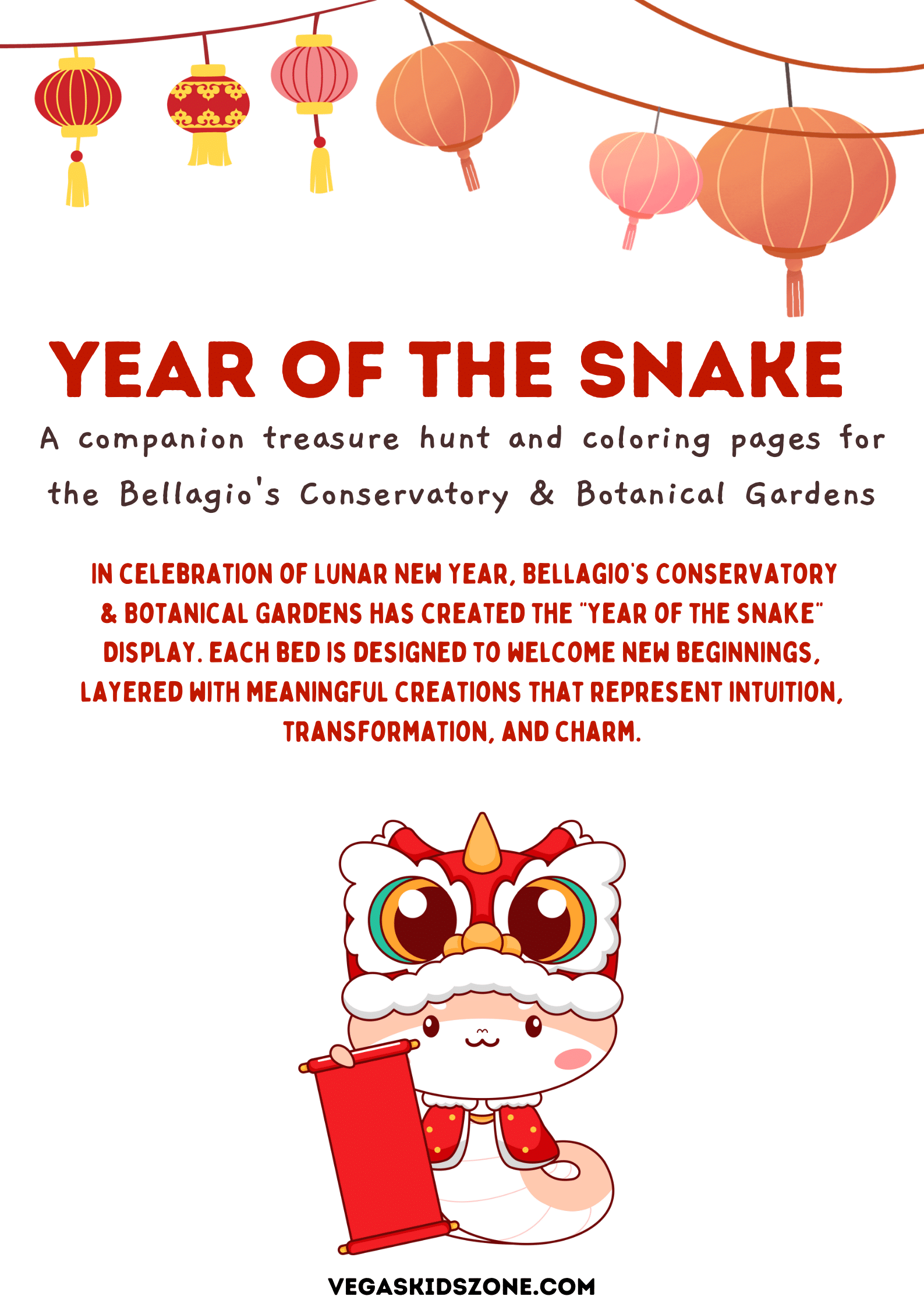
Chinese New Year in Las Vegas Free Study Unit
Original price was: $5.97.$0.00Current price is: $0.00.
Description
Go here for a full description and answers to the VKZ Study Unit and learn all about what it took to create this amazing display.
Study Unit: Year of the Snake
Grade Level:
Adaptable for K-12 (modify activities for different age groups)
Duration:
1-2 weeks
Learning Objectives
By the end of this unit, students will be able to:
- Understand the significance of the Year of the Snake in Chinese culture and the Chinese Zodiac.
- Explore the characteristics of the Snake and how it relates to personality traits.
- Learn about the biology and symbolism of snakes in different cultures around the world.
- Create art, stories, and projects inspired by the Year of the Snake.
Materials Needed
- Chart or images of the Chinese Zodiac
- Access to books, articles, or videos about snakes
- Art supplies (paper, paints, markers, clay, etc.)
- Writing materials or devices
- Internet access for research
- Printable worksheets (optional)
Lesson Plan
Day 1: Introduction to the Chinese Zodiac
- Discussion:
- Introduce the 12 animals of the Chinese Zodiac and their rotation.
- Explain the Year of the Snake and its place in the cycle.
- Discuss how the Zodiac works with the lunar calendar.
- Activity:
- Have students find their own Zodiac animal and compare its traits to their personality.
- Create a Zodiac wheel or chart for display.
- Homework:
- Research the myths and legends surrounding the origin of the Chinese Zodiac and write a summary.
Day 2: Characteristics of the Snake in Chinese Culture
- Lesson:
- Discuss the personality traits associated with people born in the Year of the Snake (e.g., wisdom, intuition, elegance, mystery).
- Explore the symbolic meanings of snakes in Chinese culture (e.g., wisdom, transformation, and rebirth).
- Activity:
- Create a class discussion: “Do you agree with the traits associated with the Snake? Why or why not?”
- Creative Writing:
- Write a short story about a fictional character born in the Year of the Snake. How do their traits influence their adventures?
Day 3: Snakes in Biology
- Science Focus:
- Teach basic snake biology: habitats, diet, anatomy, and unique behaviors (e.g., shedding skin, movement).
- Discuss common snake species from around the world, including those found in the students’ local region.
- Activity:
- Label a diagram of a snake’s anatomy.
- Watch a documentary or educational video about snakes.
- Homework:
- Research a specific snake species and prepare a short presentation about it.
Day 4: Snakes in Global Cultures
- Lesson:
- Compare how snakes are viewed in different cultures:
- Positive symbols (e.g., healing in ancient Greece with the rod of Asclepius).
- Negative associations (e.g., biblical symbolism).
- Folktales and myths involving snakes (e.g., Naga in Hindu mythology).
- Compare how snakes are viewed in different cultures:
- Art Activity:
- Create a painting, drawing, or sculpture of a snake that reflects its cultural symbolism in a chosen tradition.
Day 5: Celebration of the Year of the Snake
- Discussion:
- Explore how Chinese New Year is celebrated and its traditions (e.g., red envelopes, dragon dances).
- Discuss how people might celebrate the Year of the Snake specifically.
- Cultural Craft:
- Make paper lanterns or a snake puppet for a class “parade.”
- Write New Year’s wishes on slips of paper and place them in a decorated “Snake Wish Jar.”
- Group Activity:
- Collaboratively design a classroom bulletin board featuring all the work completed during the unit.
Assessment Options
- Presentation:
- Students share their research on snake species or cultural symbolism in a 3-minute presentation.
- Creative Project:
- Submit a piece of writing, artwork, or a diorama inspired by the Year of the Snake.
- Quiz:
- A short quiz on the Chinese Zodiac, snake biology, and cultural meanings of snakes.
Extension Activities
- Field Trip:
- Visit a local zoo or natural history museum to learn more about snakes and their habitats.
- Cooking Project:
- Make a Chinese New Year recipe like dumplings or spring rolls to connect with the celebration.
- Snake Trivia Game:
- Create a game where students answer fun facts about snakes and the Chinese Zodiac.
- Write a Myth:
- Students create their own myth or story about how the Snake became part of the Chinese Zodiac.
Recommended Resources
- Books:
- The Great Race: The Story of the Chinese Zodiac by Dawn Casey
- Amazing Snakes! by Sarah L. Thomson
- Videos:
- National Geographic Kids: Snake Facts
- Chinese New Year documentaries
- Websites:
- Chinese Zodiac interactive sites
- Reputable wildlife conservation sites about snakes
Conclusion
Wrap up the unit with a class celebration where students share their projects, artwork, and stories. Reflect on the lessons learned about the cultural, scientific, and artistic significance of the Year of the Snake.
Related products
-
Sale!

Can You Spot the Difference Thanksgiving Game
Original price was: $5.00.$0.00Current price is: $0.00. Add to cart -
Sale!

Scavenger Hunt and Coloring Pages for Bellagio Conservatory and Botanical Gardens
Original price was: $5.97.$0.00Current price is: $0.00. Add to cart -
Sale!

Black History Month Leaders Coloring Pages & Education Pack
Original price was: $8.97.$0.00Current price is: $0.00. Add to cart
Reviews
There are no reviews yet.